This guide covers FDM printers for miniatures. Pick one whose maker names a nozzle of 0.25 mm or smaller, then expect the gain mostly in supports: Prusa’s 2018 nozzle article, written for the MK3S+ and MINI, says a 0.25 mm nozzle improved miniatures only slightly and helped most with supports, while Bambu Lab says a 0.2 mm nozzle gives clearer detail. On maker pages, the A1 and P1S list 0.2 mm, and the MK4S and Adventurer 5M name 0.25 mm. This guide quotes no prices.


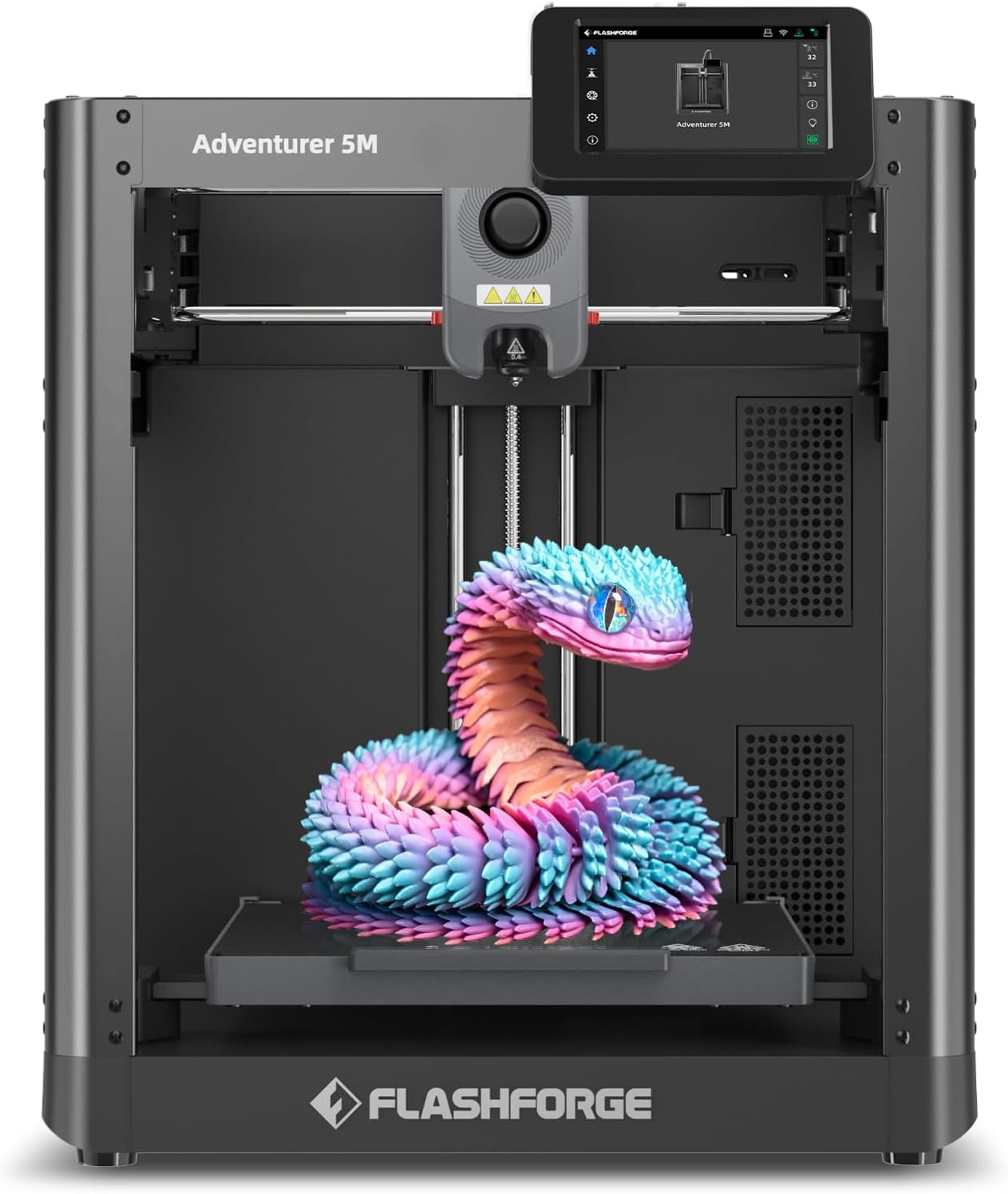
Quick Comparison
| Printer | Smallest nozzle named | Source | 80% of nozzle diameter (our arithmetic) |
|---|---|---|---|
| Bambu Lab A1 | 0.2 mm (A1 and A1 mini) | Bambu Lab Wiki | 0.16 mm |
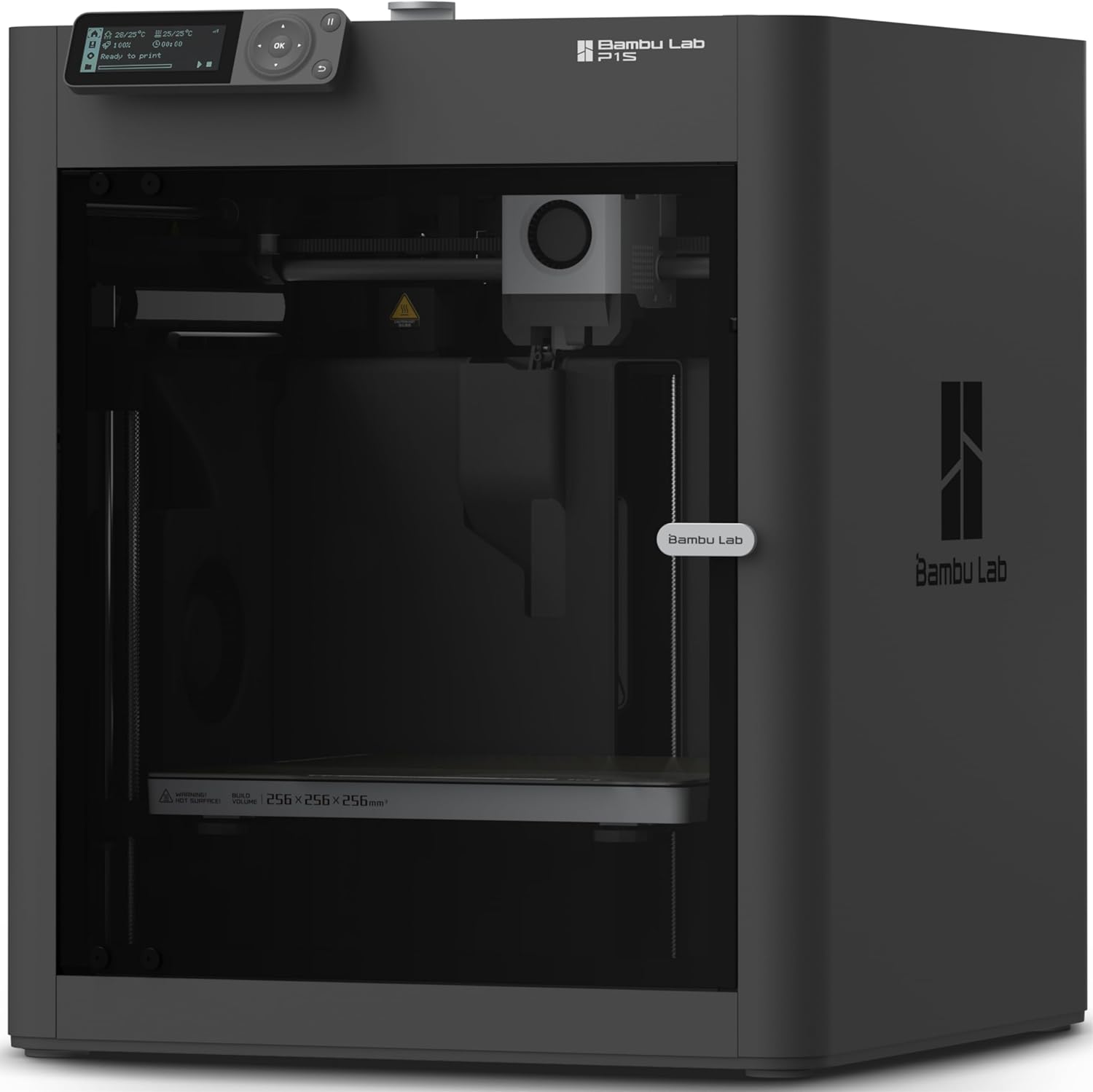
| Bambu Lab P1S | 0.2 mm (X1C, P1P, P1S hotend) | Bambu Lab Wiki | 0.16 mm |
| Original Prusa MK4S | 0.25 mm | Prusa product page | 0.20 mm |
| FLASHFORGE Adventurer 5M | 0.25 mm (optional hot end; listing says 0.25 to 0.8 mm) | Flashforge Wiki; range from Amazon listing | 0.20 mm |
Sources: Bambu Lab Wiki nozzle page, Prusa pages, the Flashforge Wiki, and the Amazon listing, checked November 2026. The 80% column applies Prusa’s guidance: its help center says layer height should be below 80% of nozzle diameter, and its 2018 blog says it should not exceed it. Both are guidance, not a hard limit.
How We Chose
The job: tabletop figures and small terrain in PLA. We compared the one detail change all four sources name: a smaller nozzle. Our order: the smallest nozzle a maker page names, 0.2 mm before 0.25 mm; ties go to the higher Desk & Bench Score. The score reflects verified buyer ratings only. These picks come from spec pages and listings, not from units we handled. See How We Choose.
Our Picks
Bambu Lab A1
Bambu Lab’s nozzle page lists the A Series nozzle in 0.2, 0.4, 0.6, and 0.8 mm for the A1 and A1 mini, with a 0.4 mm stainless nozzle standard and hardened steel optional. It calls 0.2 mm the smallest diameter, for extreme detail, with typical layers of 0.05 to 0.12 mm and a high clog risk. This SKU’s title lists no Combo.
Best for: fine detail work where you want a 0.2 mm nozzle the maker sells for this model.
Avoid if: you print carbon fiber or glass fiber filament: Bambu’s A1 store page says filaments with hard particles such as CF and GF need a hardened steel nozzle in place of the stock stainless one.
Bambu Lab P1S
Bambu Lab’s nozzle page lists the P1 Series hotend in 0.2 to 0.8 mm for the X1C, P1P, and P1S, and says the P1S ships with a 0.4 mm stainless nozzle. It sells the nozzle alone or as a complete hotend with heater, thermistor, sock, and fan.
Best for: a printer where the small-nozzle change means swapping a hotend sold complete.
Avoid if: you want 0.25 mm: the page lists 0.2 and 0.4, not 0.25.
Original Prusa MK4S
Prusa’s page says you can print very intricate models with the 0.25 mm nozzle. Prusa’s nozzle article says it gives easy-to-remove supports with nearly invisible marks, but longer print times, higher clog risk, and no compatibility with some filaments, those containing larger particles. That article was written for the MK3S+ and MINI, so read it as Prusa’s general view, not an MK4S result.
Best for: small figures printed with supports, where Prusa says the small nozzle helps most.
Avoid if: you print filaments with larger particles: Prusa’s article lists them as incompatible with the 0.25 mm nozzle.
FLASHFORGE Adventurer 5M
Flashforge’s wiki lists optional hot ends of 0.25, 0.6, and 0.8 mm and suggests the 0.4 or 0.25 mm nozzle for PLA and PETG; its product page says nozzles swap in 3 seconds. The listing’s 0.25 to 0.8 mm range is listing only. The wiki also lists nozzle unclogging as a maintenance procedure, which matters because small nozzles clog more.
Best for: trying a 0.25 mm nozzle that Flashforge’s wiki names.
Avoid if: you need the full 0.25 to 0.8 mm range confirmed by the maker; only the listing states it.
What a Smaller Nozzle Changes
The sources disagree on the gain. Bambu Lab’s wiki says a 0.2 mm nozzle gives clearer detail and a better surface finish, and lists miniatures among its uses. Prusa’s article says a 0.25 mm nozzle changed miniatures only a little, and that without supports the difference was “close to zero.” The nozzle sizes differ, and Prusa’s article dates from 2018. Both name the cost: Bambu Lab lists a high clog risk, and Prusa lists longer print times and higher clog risk.
Our arithmetic for a 32 mm figure: at 0.20 mm layers, 32 / 0.20 = 160 layers; at 0.08 mm, inside Bambu Lab’s 0.05 to 0.12 mm range for a 0.2 mm nozzle, 32 / 0.08 = 400 layers, which is 2.5 times as many. For the standard nozzle, our 0.4 mm layer height guide applies, and common nozzle sizes lists the rest.
Terrain Tiles on One Plate
Our arithmetic with Prusa’s 250 x 210 mm for the MK4S: a 2 in tile is 2 x 25.4 = 50.8 mm, so 250 / 50.8 = 4.9 fits 4 across and 210 / 50.8 = 4.1 fits 4 deep, 4 x 4 = 16 tiles. Bambu Lab’s wiki gives the A1 256 x 256 mm: 256 / 50.8 = 5.04, so 5 x 5 = 25 on paper, with 2 mm to spare. Our reading: that leaves no room for a brim.
FAQ
Is a 0.2 mm nozzle worth it for miniatures?
Bambu Lab says it gives clearer detail; Prusa says the gain on miniatures is slight. Both name clog risk.
Does this guide cover resin?
No, it covers FDM only. Resin is a separate route compared in our FDM vs resin quality guide; resin work needs ventilation, nitrile gloves, eye protection, and the resin maker’s SDS. For general FDM picks, see best 3D printers or our FDM printers category.
Changelog: November 2026: first published.